

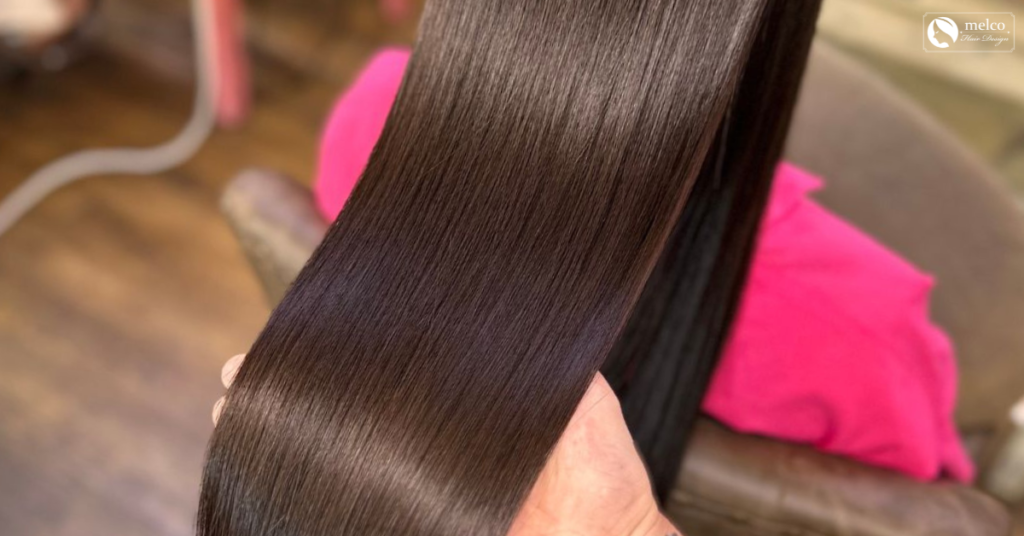
“I got my hair straightened, but it became frizzy and brittle.”
“My ends became so damaged that I could barely run my fingers through them.”
“I had been growing my hair for a long time, but I was told the only option was to cut it.”
Have you ever experienced something like this after hair straightening?
You went to the salon because you wanted smoother, more beautiful hair.
But instead, the condition of your hair became worse, and eventually you were told that the damaged section had to be cut.
For many people, this experience can make them afraid to try hair straightening again.
This is especially common with hair that has already been through several chemical treatments, such as:
- bleaching,
- repeated hair coloring,
- previous straightening,
- highlights,
- or treatments performed at different salons over time.
Even when hair looks relatively healthy from the outside, it can still contain areas that are much more fragile than they appear.
That is why one of the most important parts of hair straightening happens before the chemical treatment even begins.
It starts with a proper hair assessment.
At melco HairDesign BKK1 in Phnom Penh, this careful diagnosis is a fundamental part of our Coconut Hair Straightening technique.
Hair Diagnosis Comes Before Hair Straightening
A good hair straightening treatment should not begin by simply choosing a chemical product and applying it.
First, the stylist needs to understand the history and current condition of the hair.
In some ways, it is similar to a medical consultation.
A doctor does not make a decision based only on how someone looks.
They ask questions.
They examine the condition.
They gather information before deciding what should happen next.
Hair straightening requires a similar mindset.
Before beginning, we need to understand things such as:
- what color treatments you have had,
- whether your hair has been bleached,
- how many times it has been straightened,
- which parts have previous chemical history,
- whether the hair feels hard or soft,
- how much elasticity remains,
- and where the hair is already weak.
Then we look at and touch the hair carefully.
Only after that can we begin deciding:
Which chemical strength should be used?
Which areas need more treatment?
Which areas should receive less?
How much heat can the hair handle?
What ironing technique is appropriate?
Hair straightening does not begin when the chemical product touches the hair.
The technique begins with the diagnosis.
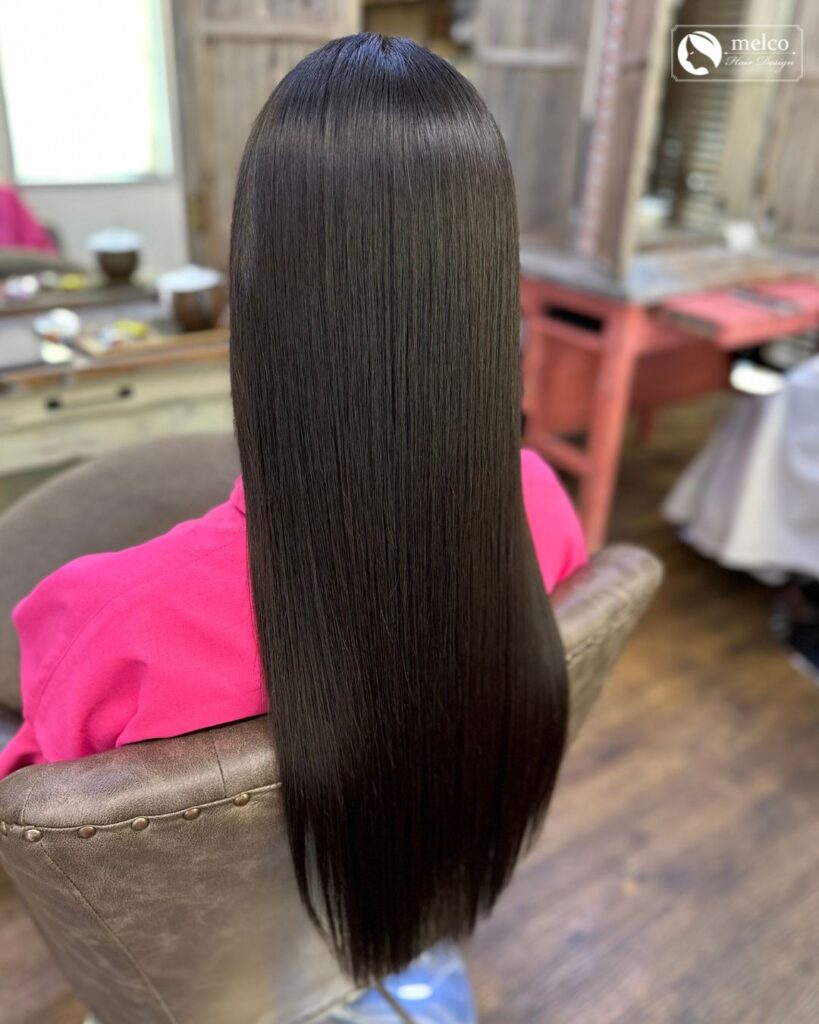
Hair Straightening Is Not Determined by the Chemical Product Alone
Many people think that the most important part of straightening is the product used.
The chemical product is important, but it is only one part of the process.
Even a high-quality product can create problems if it is used incorrectly.
If the condition of the hair is misunderstood, chemicals that are too strong may be used.
If heat is not controlled properly, already weakened hair can receive unnecessary additional stress.
The curl may become straight.
But at the same time, the hair may lose too much of its natural elasticity.
When the damage becomes more severe, the structure of the hair itself can begin to break down.
This may cause:
- frizzy or fuzzy texture,
- extreme dryness,
- stiffness,
- roughness,
- breakage,
- or severely weakened ends.
In Japan, severely overprocessed hair is sometimes referred to as “bibiri-ge”, a condition where the hair becomes extremely damaged, distorted, and fragile after chemical treatment.
Once hair reaches this level of damage, it cannot simply be restored to its original healthy state.
Hair care products can help improve the feel and appearance of the hair, but the damaged structure itself cannot be completely reversed.
Depending on the condition, the realistic options may include:
carefully managing the texture with treatments and leave-in products,
gradually trimming the damaged areas,
or eventually cutting away the severely compromised hair.
That is why preventing this type of damage is so important.
Why Salon Choice Matters for Hair Straightening
Hair straightening is one of the salon services where technical differences can significantly affect the result.
A stylist must understand both:
the strength of the curl
and
the strength of the hair.
These are not the same thing.
For example, someone may have very strong curls but extremely fragile bleached hair.
Another person may have healthy, strong hair with only a mild wave.
Using the same chemical strength for both clients would not make sense.
At melco HairDesign, we have spent more than a decade studying how to balance these two factors.
The goal is to use the amount of chemical and heat strength needed to straighten the curl without placing unnecessary stress on the hair.
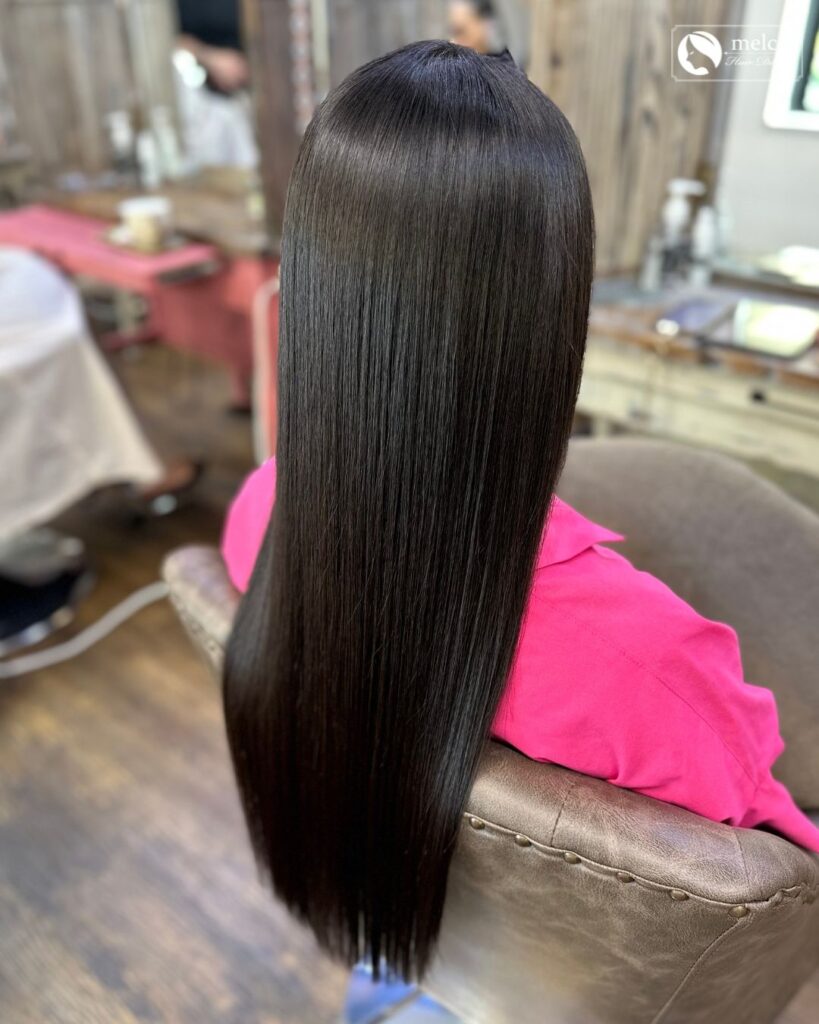
Why Previous Color and Bleach History Matters
Hair does not always have the same condition from roots to ends.
For example:
The roots may be completely natural.
The middle section may have been colored several times.
The ends may contain bleach and previous straightening.
There may also be highlights around the face.
From the outside, all of the hair may appear similar.
But chemically, these sections are very different.
If the same product is applied equally across every area, some parts of the hair may receive far more chemical strength than they can tolerate.
This is one reason why hair history is so important.
At melco HairDesign BKK1, we ask detailed questions about previous treatments because this information helps us understand what the hair may have experienced before you came to us.
Coconut Hair Straightening Is Based on Careful Control
Coconut Hair Straightening was developed by melco HairDesign after years of research into permanent hair straightening.
Our approach is not simply:
“Use a strong product and make the hair straight.”
Instead, we carefully control:
- chemical selection,
- chemical strength,
- processing time,
- moisture,
- drying,
- ironing temperature,
- ironing time,
- and the amount of heat delivered to the hair.
Every one of these decisions affects the final result.
Straightening is not only about whether the curl disappears.
It is about how much natural flexibility can remain after the curl is straightened.
We Do Not Rely Only on Stylist Intuition
Hair straightening is often described as a highly experience-based technique.
Experience is important.
But relying only on intuition can make results inconsistent.
At melco, we have developed clear technical standards based on more than a decade of research and extensive straightening experience.
We have accumulated data from more than 50,000 hair straightening cases while developing the Coconut Hair Straightening system.
The purpose of these standards is to make every part of the treatment more logical and repeatable.
From chemical selection to ironing technique, each step has a reason behind it.
We also train our stylists so that the basic philosophy and treatment standards remain consistent regardless of who performs the service.
Our goal is not to have one “special stylist” who can achieve good results.
Our goal is to create a system that allows our team to provide a consistently high standard of Coconut Hair Straightening.
Beautiful Hair Should Last Beyond One Appointment
Some clients have continued receiving Coconut Hair Straightening at melco for more than ten years while maintaining long, soft, smooth hair.
That does not happen because hair straightening has zero impact on the hair.
Permanent straightening is still a chemical service.
The difference is how much unnecessary stress is added during each appointment.
Hair straightening is usually repeated every few months.
That means what happens during one appointment becomes part of the hair’s history.
A small amount of unnecessary stress today may not seem significant.
But if the same thing is repeated again and again over several years, the difference can become much larger.
That is why we think about more than today’s finish.
We also think about:
six months from now,
one year from now,
five years from now,
and ten years from now.
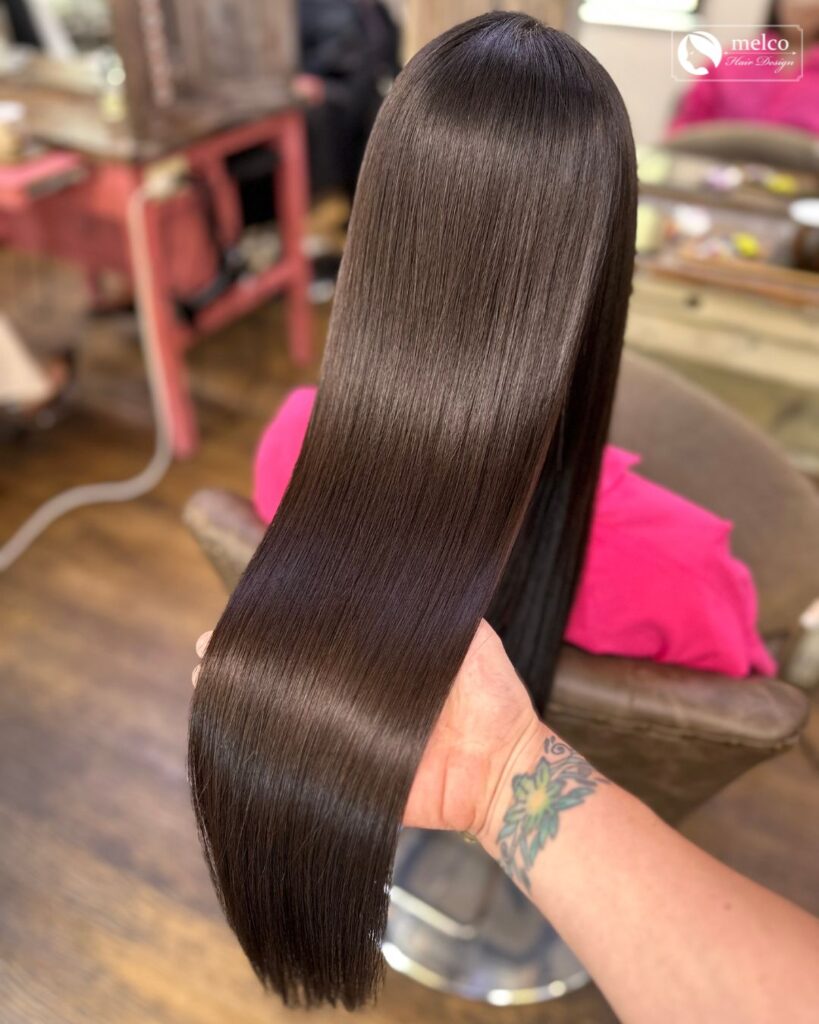
We Want You to Keep Enjoying Hair Color and Haircuts Too
Our goal is not simply to create straight hair.
We want to preserve a hair condition that allows you to continue enjoying different hairstyles in the future.
That may include:
hair color,
highlights,
a new haircut,
long hair,
or other styles you want to try.
If too much damage is created during straightening, your future hairstyle options can become limited.
You may want to bleach your hair later, but the hair may no longer be strong enough.
You may want to keep growing it long, but the ends may begin breaking.
You may want to change your haircut, but damaged areas may need to be removed first.
That is why long-term hair condition matters.
At melco, we want straightening to expand your hairstyle possibilities, not reduce them.
Hair Straightening After a Bad Experience
If you have previously experienced severe damage after straightening, it is understandable to feel nervous about doing it again.
You may think:
“I am scared my hair will become damaged again.”
“What if I lose more length?”
“Can my hair handle another straightening treatment?”
The first step is not immediately deciding whether to straighten your hair.
The first step is understanding the condition of your hair now.
At melco HairDesign BKK1, we will carefully check:
- your previous straightening history,
- bleaching history,
- color history,
- current elasticity,
- strength,
- dryness,
- and the condition of different areas of the hair.
If we believe straightening would place too much stress on the hair, we will not recommend forcing the treatment.
We may suggest another option, such as MELCOCO Special Treatment, or a longer-term plan until the hair is in a more suitable condition.
Damaged Hair Needs More Than a Stronger Treatment
When hair is difficult to straighten, the solution is not always stronger chemicals.
Sometimes stronger treatment is exactly what creates the problem.
A technically careful approach means understanding where strength is necessary and where restraint is more important.
The goal is not:
maximum chemical power.
The goal is:
the minimum necessary strength to achieve the result.
This is one of the core ideas behind Coconut Hair Straightening.
Hair Straightening in Phnom Penh
Phnom Penh’s hot and humid climate can make naturally curly, wavy, or frizzy hair especially difficult to manage.
Many people straighten their hair every morning with a flat iron just to control:
- frizz,
- volume,
- waves,
- and humidity.
Professional permanent straightening can make everyday styling much easier.
But because straightening is a treatment you may continue for many years, choosing a salon that carefully considers the condition and history of your hair is important.
Especially if your hair has already been:
colored,
bleached,
highlighted,
previously straightened,
or damaged.
Looking for a Hair Straightening Salon in Phnom Penh After Previous Damage?
If you are searching for:
Japanese hair straightening in Phnom Penh,
hair straightening for damaged hair in Cambodia,
hair straightening after bleaching,
a Japanese hair salon in BKK1,
or a salon after a bad hair straightening experience,
please feel free to consult with melco HairDesign BKK1.
You may have been told:
“Your hair is too damaged.”
“You need to cut it.”
“You should never straighten your hair again.”
Every situation is different.
We cannot promise that every damaged hair condition can safely receive straightening.
But we can carefully assess your current hair, explain what we see, and recommend what we believe is the most suitable approach.
We do not want to create beautiful hair for only one day.
We want to help you continue enjoying beautiful hair, color, and hairstyles for years to come.
melco HairDesign BKK1
Japanese Hair Salon in Phnom Penh, Cambodia
📍 No.40, Street 306, BKK1, Phnom Penh
🕘 Open 9:00 AM – 7:00 PM
🇯🇵 Japanese Stylist Available
Our Services
- Coconut Hair Straightening
- MELCOCO Special Treatment
- Japanese Hair Coloring
- Haircuts
- Hair Care for Frizzy, Colored, Bleached and Damaged Hair
If you have experienced severe damage from previous hair straightening, or if you are worried about whether your hair can safely be straightened, please contact our team.
We will carefully assess your hair condition and recommend the most appropriate next step.